


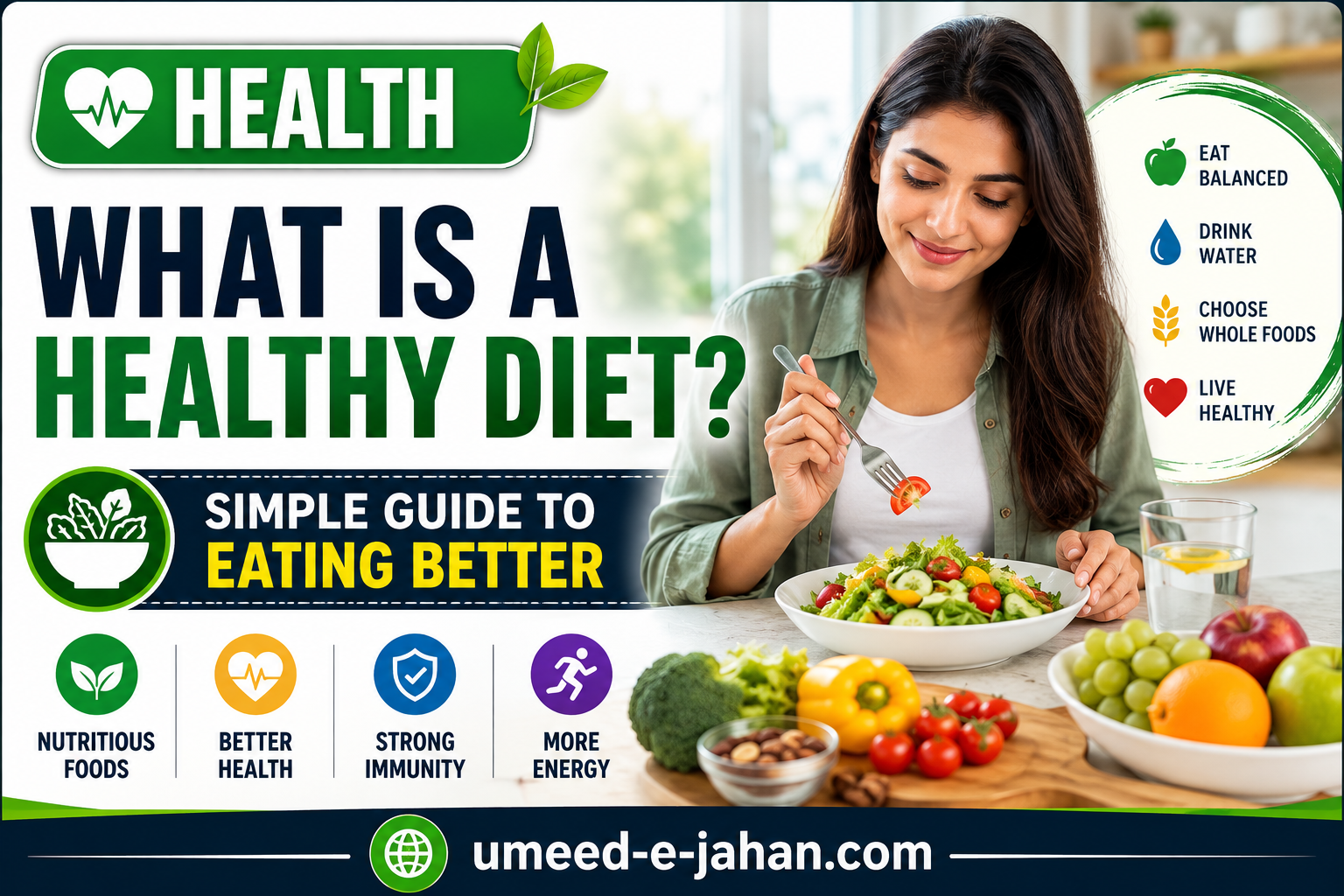
Eating healthy does not have to mean following a complicated diet or completely changing everything you eat.
A healthy diet is mainly about balance, variety and moderation. It means giving your body a range of nutrients while limiting excessive amounts of foods and ingredients that can negatively affect health.
According to the World Health Organization (WHO), a healthy diet is based on four basic principles: adequacy, balance, moderation and diversity.
For some people, improving their diet may simply mean eating more vegetables and fruit, choosing whole grains more often, reducing sugary drinks, or paying closer attention to portion sizes.
This guide explains the basics of a healthy diet and how you can make better food choices without following extreme rules.
Why Is a Healthy Diet Important?
Food provides the energy and nutrients your body needs to function.
A varied and balanced diet can help provide important nutrients while supporting overall health. WHO says healthy diets can help protect against malnutrition and several noncommunicable diseases, including heart disease, diabetes and some cancers.
However, there is no single diet that is perfect for everyone.
Your nutritional needs can vary depending on factors such as age, activity level, lifestyle, culture and individual health needs.
That’s why a healthy eating plan should be realistic and sustainable rather than based on extreme restrictions.
What Foods Are Part of a Healthy Diet?
A healthy diet can include foods from several different groups.
Fruits and Vegetables
Fruits and vegetables provide vitamins, minerals, fibre and other beneficial nutrients.
WHO recommends that people over the age of 10 aim for at least 400 grams of fruit and vegetables per day.
You don’t necessarily need to eat the same fruits and vegetables every day.
Try to include variety:
- Apples
- Bananas
- Oranges
- Berries
- Tomatoes
- Carrots
- Spinach
- Broccoli
- Cucumbers
- Other locally available vegetables
Fresh isn’t the only option. Frozen or canned fruits and vegetables can also be useful choices when they don’t contain excessive added sugar or sodium.
Choose More Whole Grains
Whole grains can be an important part of a balanced diet.
Examples include:
- Oats
- Brown rice
- Whole-grain bread
- Whole-wheat products
- Whole grains such as wheat and maize
Whole grains and other high-fibre foods can help make meals more nutritious.
Rather than trying to remove carbohydrates completely, focus on the quality and variety of carbohydrate sources you eat.
WHO recommends that carbohydrates should come primarily from sources such as whole grains, vegetables, fruits and pulses.
Include Beans, Lentils and Other Pulses
Beans, lentils, chickpeas and other pulses can provide protein, fibre and other nutrients.
They can also be an affordable addition to many meals.
For example, you can include:
- Lentil soup
- Chickpea salad
- Beans with rice
- Lentil curry
- Chickpeas with vegetables
These foods can make a meal more filling while adding nutritional variety.
Choose Healthy Sources of Protein
Protein is an important nutrient and can come from both plant and animal foods.
Depending on your dietary preferences, sources can include:
- Eggs
- Fish
- Chicken
- Lean meats
- Milk and other dairy foods
- Beans
- Lentils
- Chickpeas
- Nuts and seeds
A healthy diet doesn’t require everyone to follow exactly the same source of protein.
The goal is to maintain variety and choose nutritious foods that fit your lifestyle.
Don’t Forget Healthy Fats
Fat is an essential nutrient, but the type of fat matters.
WHO recommends reducing saturated and trans fats and replacing them with unsaturated fats where possible.
Sources of unsaturated fats include foods such as:
- Nuts
- Seeds
- Avocado
- Fish
- Some vegetable oils
This doesn’t mean that you should add unlimited amounts of these foods to your diet. Fats are energy-dense, so portions still matter.
Why Should You Limit Added and Free Sugars?
Sweet foods and drinks can contain significant amounts of free sugars.
Examples include:
- Soft drinks
- Sweetened juices
- Cakes
- Cookies
- Sweets
- Desserts
- Sugary snacks
WHO recommends limiting free sugars to less than 10% of total daily energy intake, with a further reduction to around 5% potentially providing additional health benefits.
One simple change is to reduce sugary drinks.
Choosing water or an unsweetened drink more often can be an easy way to reduce sugar intake.
How Much Salt Is Too Much?
Salt is commonly used in cooking and processed foods, but excessive sodium intake can be harmful to health.
WHO recommends that adults consume less than 2 grams of sodium per day, equivalent to less than 5 grams of salt.
A significant amount of sodium can come from processed and packaged foods rather than only from the salt shaker.
You can reduce your intake by:
- Using less salt while cooking
- Limiting highly salty snacks
- Checking food labels
- Using herbs and spices for flavour
- Eating more minimally processed foods
What About Processed Foods?
Not every processed food is automatically unhealthy.
Some foods are processed simply to make them safer, easier to store or easier to prepare.
However, highly processed foods can sometimes contain large amounts of salt, sugar or unhealthy fats.
WHO recommends making minimally processed and unprocessed foods the foundation of a healthy diet while limiting foods high in unhealthy fats, free sugars and sodium.
Instead of thinking in terms of “never eat processed food,” look at the overall quality and frequency of the foods you consume.
A Simple Healthy Meal Example
You don’t need an expensive meal plan to start eating better.
A simple meal could include:
Protein: grilled chicken, fish, eggs, beans or lentils
Carbohydrate: whole-grain bread, brown rice, oats or another whole-grain food
Vegetables: salad or cooked vegetables
Fruit: a piece of fresh fruit
Drink: water or another unsweetened beverage
The exact meal will depend on your dietary preferences, budget and nutritional needs.
How to Build Healthy Eating Habits
Making small changes can be easier than trying to completely transform your diet overnight.
1. Add More Vegetables
Start by adding vegetables to meals you already eat.
2. Eat More Variety
Don’t rely on the same few foods every day.
3. Drink More Water
Choose water more often instead of sugary drinks.
4. Read Food Labels
Look at sugar, sodium, saturated fat and serving size when comparing packaged foods.
5. Plan Your Meals
Planning can make it easier to avoid last-minute unhealthy choices.
6. Don’t Skip Enjoyment
Healthy eating doesn’t mean that you can never enjoy your favourite foods.
The goal is a balanced overall diet.
Is a Healthy Diet the Same for Everyone?
No.
A healthy diet can look different from person to person.
For example, someone who exercises regularly may have different energy requirements from someone with a sedentary lifestyle.
Age, pregnancy, allergies, medical conditions, medications and other factors can also affect dietary needs.
The NHS similarly notes that people with special dietary needs or a medical condition should seek advice from a doctor or registered dietitian.
If you have a medical condition or have been given a specific diet by a healthcare professional, don’t make major dietary changes based only on a general online article.
Healthy Diet vs. Extreme Diets
The internet is full of diets promising rapid weight loss or dramatic health improvements.
Be careful with plans that:
- Eliminate entire food groups without a medical reason
- Promise extremely rapid results
- Require expensive supplements
- Claim one food can “detox” your body
- Recommend severe calorie restriction
- Present themselves as a cure for medical conditions
A sustainable diet is generally more useful than a plan that is impossible to maintain.
Healthy eating should fit into your everyday life.
Frequently Asked Questions
What is a healthy diet?
A healthy diet is a varied and balanced way of eating that provides the nutrients your body needs while limiting excessive amounts of salt, free sugars and unhealthy fats.
What should I eat every day for a healthy diet?
Try to include a variety of vegetables, fruits, whole grains, pulses, protein-rich foods and appropriate sources of healthy fats. Your exact dietary needs can vary.
How much fruit and vegetables should I eat?
WHO recommends at least 400 grams of fruit and vegetables per day for people over 10 years of age.
Should I completely stop eating sugar?
Not necessarily. A better approach for most people is to limit free sugars and reduce frequent consumption of sugary foods and drinks.
Is all fat unhealthy?
No. Fat is an essential nutrient. The type of fat matters, and unsaturated fats are generally preferred over saturated and industrially produced trans fats.
Can I eat my favourite foods while following a healthy diet?
Yes. Healthy eating is about your overall dietary pattern. Occasional favourite foods can fit into a balanced diet, depending on your individual needs.
Final Thoughts
A healthy diet doesn’t have to be complicated or expensive.
Start with simple changes: eat more vegetables and fruit, choose a variety of nutritious foods, include whole grains and pulses, limit excessive sugar and salt, and pay attention to the overall balance of your meals.
The most important thing is consistency.
You don’t need to change everything in one day. Small, realistic improvements can become long-term habits.
Note: This article provides general health information and is not a substitute for personalized medical advice. If you have a medical condition, food allergy, pregnancy-related nutritional needs, or another specific health concern, speak with a qualified healthcare professional.